10 best live music pubs for a seriously good night out
Key Takeaways
The best live music pubs make the music feel like part of the room rather than a separate performance. I look for character, a thoughtful drinks list, and a crowd willing to enjoy the night properly.
- Neighbourhood pubs offer relaxed shows and familiar faces.
- Historic venues bring atmosphere as well as musical history.
- Blues, country, Irish, jazz, and rock pubs each create a distinct kind of night.
- Rooftops and dance floors suit listeners who want more than a seat.
- Late-night venues reward flexible plans and an appetite for one more song.
1. The neighborhood pub where the band knows your name
I like a neighbourhood pub that feels lived-in before the first chord is played. The tables may be mismatched, the carpet may have a few stories, and the bar staff often recognise regulars without making a performance of it. That easy familiarity gives the music somewhere welcoming to land.
The strongest rooms usually book musicians who suit the space rather than chasing whatever sound is currently fashionable. A solo singer can make a small corner feel intimate, while a compact trio might turn the whole room into a gently swaying audience. I can hear the lyrics, order another drink without shouting, and still feel part of an occasion.
For me, this is the pub to choose when conversation matters almost as much as the set. I arrive early enough to find a decent table, settle into the local rhythm, and let the evening unfold without a strict itinerary. A good local room does not need spectacle to make a lasting impression.
2. The historic watering hole with legendary live sets
Some pubs seem to have absorbed decades of music into their walls. The timber, brass fittings, old photographs, and softened floorboards create a sense that plenty of memorable nights came before mine. Even without knowing the venue’s full history, I can usually feel when a room has been hosting musicians for a long time.
The attraction is not simply nostalgia. A well-established pub often understands the practical details that make live music work: a sensible stage position, decent sightlines, and staff who know when to keep service moving quietly. The result is a show that feels confident rather than improvised, even when the performers are taking a few risks.
I tend to pair this kind of outing with a little patience. The opening act may set the mood, the main set may gather pace gradually, and the best moment might arrive after I thought the night had already peaked. These are rooms where the atmosphere is part of the ticket, even when there is no ticket at all.
3. The gritty blues pub that turns volume into a personality
A gritty blues pub should have a little roughness around the edges. I want low light, close tables, an amplifier doing honest work, and a bass line that seems to travel through the floorboards. If everything feels too polished, the blues can lose some of its bite.
The best performances in these rooms are physical without becoming empty noise. A guitarist can stretch a phrase, a drummer can push the tempo, and the singer can leave enough space for the band to answer back. I enjoy the way a familiar twelve-bar shape can still sound new when the players lean into it.
This is rarely the place for a quiet catch-up. I go for the concentration of the crowd, the slight thrill of standing close to the action, and the knowledge that the set may take an unexpected turn. Earplugs are a sensible addition to any gig bag, particularly when the speakers are treated as enthusiastic members of the band.
4. The Irish pub where the singalong starts before the second round
An Irish pub with live music has a particular talent for making a room of strangers feel briefly organised. The musicians might begin with a fiddle tune, a ballad, or a familiar folk number, and before long the audience has found its part. I enjoy that lack of ceremony; nobody needs a formal invitation to join in.
The magic depends on restraint as much as enthusiasm. A good performer leaves room for the room, allowing the chorus to rise without overpowering every verse. The bar remains busy, glasses appear at the right moments, and the set moves between lively tunes and songs that pull the volume down for a while.
I would choose this pub for a group with mixed musical tastes because the social side carries everyone along. Even the person who claims not to sing tends to contribute a line or two once the familiar refrain arrives. By the time the second round is ordered, the room usually has its own backing choir.
5. The country bar with boots, banjos, and zero room for wallflowers
A country bar rewards people who enjoy a little movement with their music. I look for a compact dance floor, a band that can switch between twang and tenderness, and enough space for the crowd to demonstrate varying interpretations of rhythm. Some dancers glide; others appear to be negotiating with their footwear.
The evening works best when the venue gives the music room to breathe and the audience a reason to participate. Before choosing a country night, I usually check a few practical details so the outing matches my mood:
- Whether the band plays classic country, bluegrass, roots, or a broad mix.
- Whether the floor is suitable for dancing or mostly decorative.
- Whether seating is available for breaks between songs.
- Whether the kitchen or bar stays open through the main set.
Those details shape the experience more than a grand description ever could. I might spend one song listening closely, the next attempting a turn I have no business attempting, and the next recovering with a cold drink. A good country pub leaves very little space for spectators who insist on remaining entirely uninvolved.
6. The jazz pub serving smooth sounds with your small plates
A jazz pub suits the kind of evening I want to take slowly. The lighting is usually gentle, the tables are close enough for a shared meal, and the music rewards attention without demanding it every second. I can listen to a brushed rhythm while still having a proper conversation between numbers.
Small plates make sense here because the night benefits from gradual pacing. I prefer food that arrives in manageable portions rather than a meal that interrupts the set with a large piece of theatre. A thoughtful drinks list helps too, particularly when the room encourages lingering rather than hurried rounds.
The musicians may move from delicate interplay to a brighter, more restless passage without announcing the change. That is part of the pleasure. I leave these pubs feeling that I have been out properly, even if the evening involved more listening than dancing and the final dish was shared across the table.
7. The rock pub where local bands get their big break
The local rock pub is often less polished than a dedicated concert venue, and that is precisely why I enjoy it. I can stand close to a new band, watch the songs find their shape, and sense the moment when a hesitant room begins to pay attention. There is a useful excitement in seeing performers before everyone knows their names.
These venues often run on a mixture of patience and noise. The opening act may be testing new material, the soundcheck may have left a few mysteries unresolved, and the crowd may be deciding whether to move forward or stay safely near the bar. When the chemistry works, those rough edges become part of the story.
I try to support the room as well as the performers. Buying a drink, arriving in time for the first act, and paying attention between conversations all help create a decent audience. A small pub can give a promising band its first genuinely attentive crowd, which is a fine reason to put up with a little feedback.
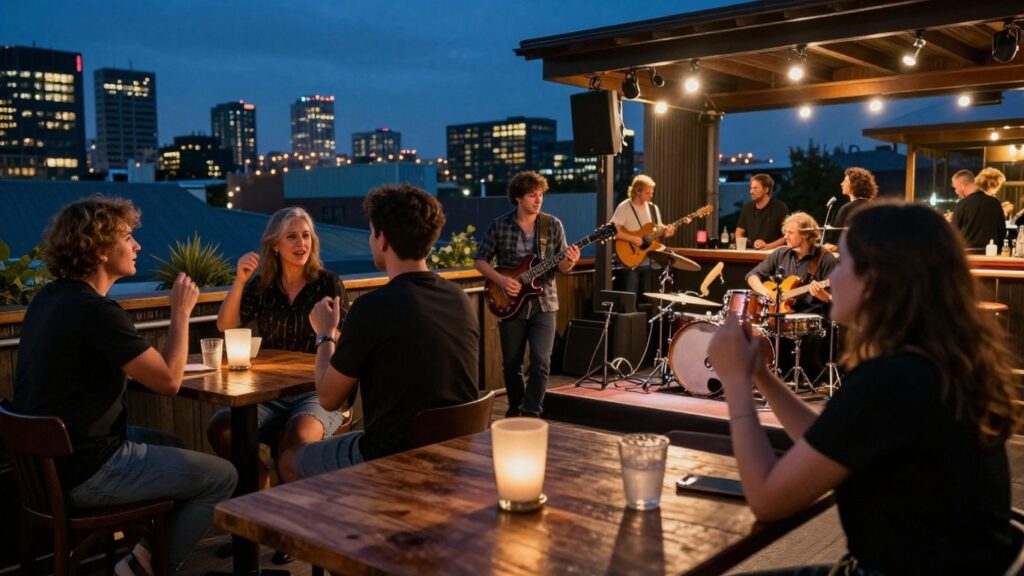
8. The rooftop pub pairing live music with skyline views
A rooftop pub changes the mood before the band has played a note. I get the open air, a shifting view of the city, and the pleasant sense that the evening has escaped the usual four walls. Even an ordinary drink feels slightly more celebratory when the last daylight is fading behind the buildings.
The music should complement that setting rather than compete with it. Acoustic acts, soul groups, and easygoing cover bands can work particularly well when people are there to talk, eat, and take in the view. I am less interested in a relentless wall of sound when the horizon is doing half the entertaining.
Weather is the one practical complication, so I check the forecast and the venue’s wet-weather arrangements before leaving home. A light jacket can be more valuable than an optimistic attitude. If the night stays clear, I get a rare combination: live music close by, fresh air overhead, and a skyline that keeps changing between songs.
9. The dance-friendly pub where sitting down feels like a missed opportunity
Some pubs are built around the idea that nobody should remain seated for too long. The room might have a small stage, a generous open patch in front of it, and a crowd that treats every familiar beat as a personal invitation. I appreciate that energy when I want a night with momentum rather than a neatly scheduled performance.
The right band understands how to manage a moving audience. It builds gradually, gives the room a chance to catch its breath, then brings the tempo back with a song that makes conversation temporarily impossible. I like being able to join the dance floor without feeling as though I have wandered into somebody else’s private party.
Comfort still matters, even in a lively room. I look for somewhere to put a jacket, a bar that is easy to reach, and a corner where I can regroup when my enthusiasm outruns my stamina. The best dance-friendly pub lets me participate fully while offering just enough refuge to make the next song tempting.
10. The late-night pub with an encore-worthy atmosphere
A late-night pub is where a casual drink can acquire a second act. The crowd is usually more relaxed, the musicians may take a few chances, and the room has lost the early-evening formality that makes everyone check the time. I like the feeling that the night is still being written rather than carefully wrapped up.
Late sets can be especially rewarding because performers sense when the remaining audience is genuinely there for the music. A familiar song may stretch into an unexpected finale, or a new act may find its confidence after the earlier crowd has gone. I try not to demand perfection at this hour; atmosphere and commitment count for plenty.
I still make a basic plan for getting home and keep an eye on the last transport options. That leaves me free to enjoy the encore without turning the final song into a logistical crisis. When the room empties slowly and the band leaves the stage to real applause, I know I have found the sort of pub that earns one more visit.
Conclusion
The best live music pubs are not identical, and that is the point: one night may call for a neighbourly room and an acoustic set, while the next demands blues, dancing, a rooftop view, or a late finish. I choose according to the atmosphere I want, check the practical details, and leave space for a pleasant surprise.
Frequently Asked Questions
What makes a pub good for live music?
A good live music pub combines clear sound, sensible room layout, comfortable service, and performers who suit the space. Atmosphere matters too, but it works best when the practical basics are handled well.
Should I arrive early for live music at a pub?
Arriving early is usually wise if seating, food, or a good view matters to you. It also gives you time to settle in before the room becomes busy and the main set begins.
Do live music pubs usually charge entry?
Some do, while others rely on a cover charge, a minimum spend, or voluntary contributions. Checking the venue’s current listing before heading out avoids surprises.
What should I wear to a live music pub?
Wear something comfortable enough for standing and moving around, while considering the venue’s style and the weather. Layers are useful when a crowded room becomes warm or an outdoor area cools down.
Can I have a conversation during live music?
That depends on the act, room size, and volume. For conversation-friendly evenings, I favour jazz, acoustic sets, or pubs with separate areas away from the stage.
Are live music pubs suitable for groups?
They can be, particularly when the venue accepts bookings or offers shared tables. I check the layout first, because a small standing room may suit a couple better than a large group.
How can I find the right live music pub for my mood?
Start with the music style, then consider seating, food, dancing, opening hours, and transport home. A quick look at the current gig listing can tell you far more than a generic venue description.